
Literacy is a foundation for learning across all subjects. At Terang College, students develop strong reading, writing, speaking, and comprehension skills from Foundation through to Year 12, supporting confidence, communication, and lifelong learning.
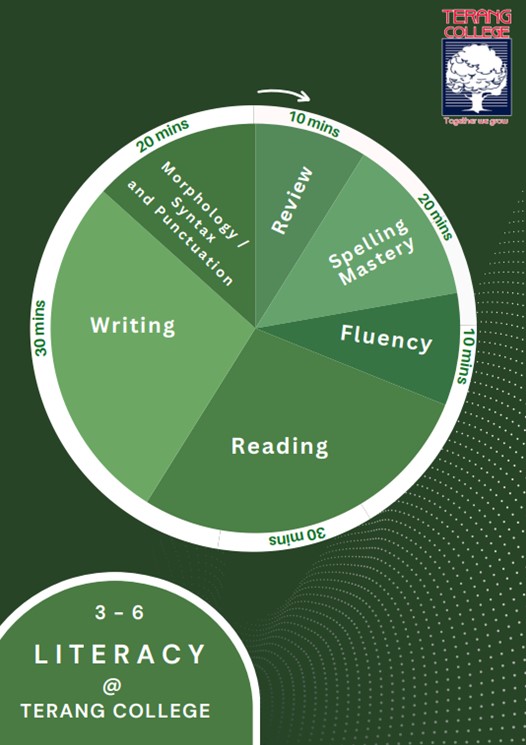
From Foundation to Year 6, students engage in a two-hour daily literacy block that follows a structured literacy approach.
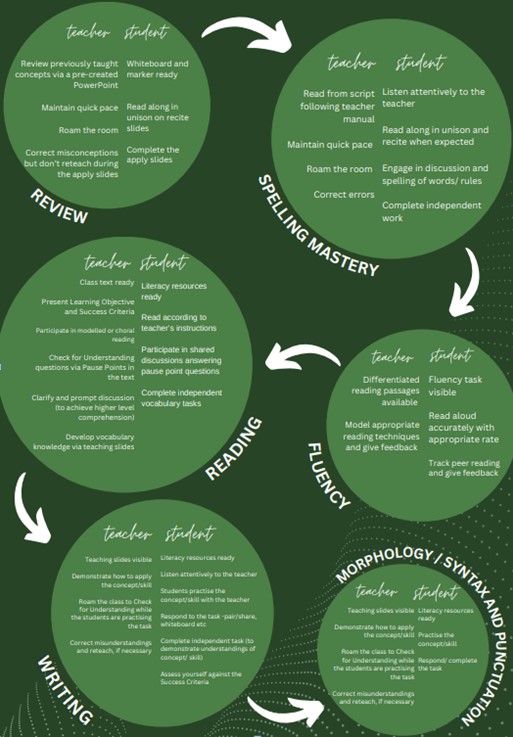
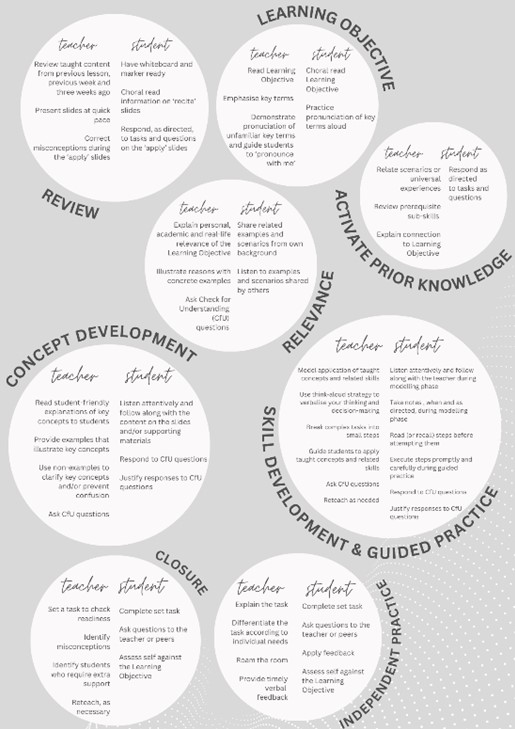
All teachers follow instructional models to create consistency and routine within each classroom, enabling students to transition seamlessly between each component.
Each component prioritises methods supported by cognitive science and educational research to enable teachers to deliver high impact literacy instruction.
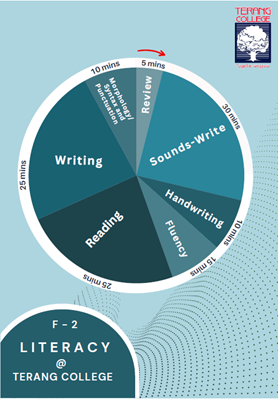
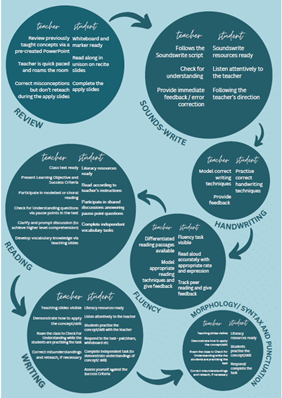
Daily review: Daily review is a systematic approach to revisiting previously covered material, enhancing learning outcomes, consolidating knowledge and bolstering retention.
Sounds Write: Sounds Write is a systematic synthetic phonics approach that is successfully used to teach students to read and spell. It draws on well-established theories of learning and teaching.
Handwriting: Letter formation is taught and practiced in handwriting to build fluency, legibility and automaticity.
Fluency: Reading fluency routines are practiced using decodable texts at individual levels, to enable students to become increasingly faster, smoother, more accurate and expressive in their reading aloud of progressively complex texts.
Reading: Reading skills are taught through exploring high-quality fiction and non-fiction texts to build knowledge, comprehension and vocabulary. Each term, two units are taught, one linked directly to the Humanities focus and one based around classic literature.
Writing: Writing lessons are linked directly to our reading text and are used to apply knowledge/concepts taught at a deeper level. Sentence- and text- level writing skills and concepts are taught explicitly before students work towards mastery and independence.
Syntax and Punctuation: Sentence-level writing skills are taught explicitly to build deep understandings of how words and phrases are arranged to make communication effective in spoken and written forms.
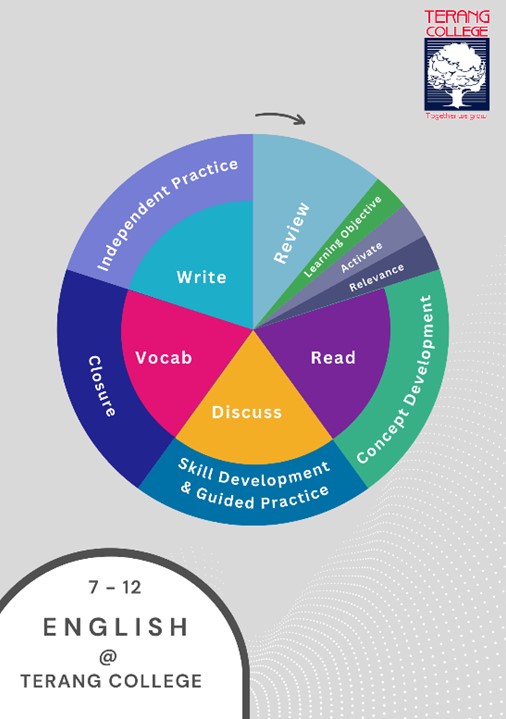
As our students shift into secondary year levels, our literacy approach comes to encompass our high-quality English curriculum, which builds on our F-6 Literacy programs; embedded and consistent literacy approaches across all subject areas; and our literacy intervention programs.
Our English curriculum centres on three different unit types: text study units, crafting texts units and argument, persuasion and issues units. Reading and viewing, writing and speaking and listening are in embedded throughout all three, yet text study units primarily focus on student-as-reader, crafting text units focus on student-as-writer, while issues, persuasion and argument units bring students into contact with rich spoken texts.
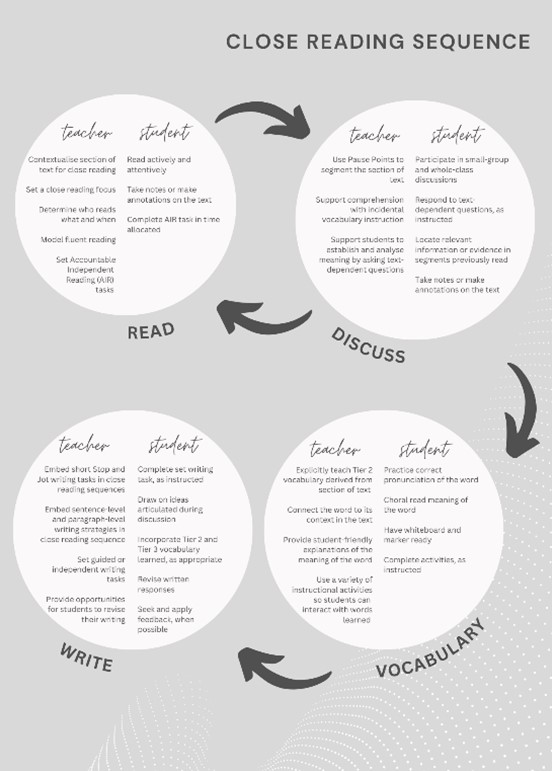
Across all three unit types, the READ – DISCUSS – VOCABULARY – WRITE close reading sequence is central to building the literacy capacities of our students, whilst supporting them to engage with the English curriculum.
Beyond English, our whole-school literacy approach centres on three key components: a 7-12 rich text curriculum, explicit vocabulary instruction, and embedded strategies from Hochman and Wexler’s The Writing Revolution approach.
For students who require more intensive literacy intervention in the secondary year levels, dedicated teachers utilise high-quality assessments and progress monitoring to develop individualised and small-group plans. Key resources utilised in these programs include the Spelling Through Morphographs resource, as out catch-up spelling curriculum, as well as catch-up reading, fluency and writing curriculums that are based on our core literacy instructional models.